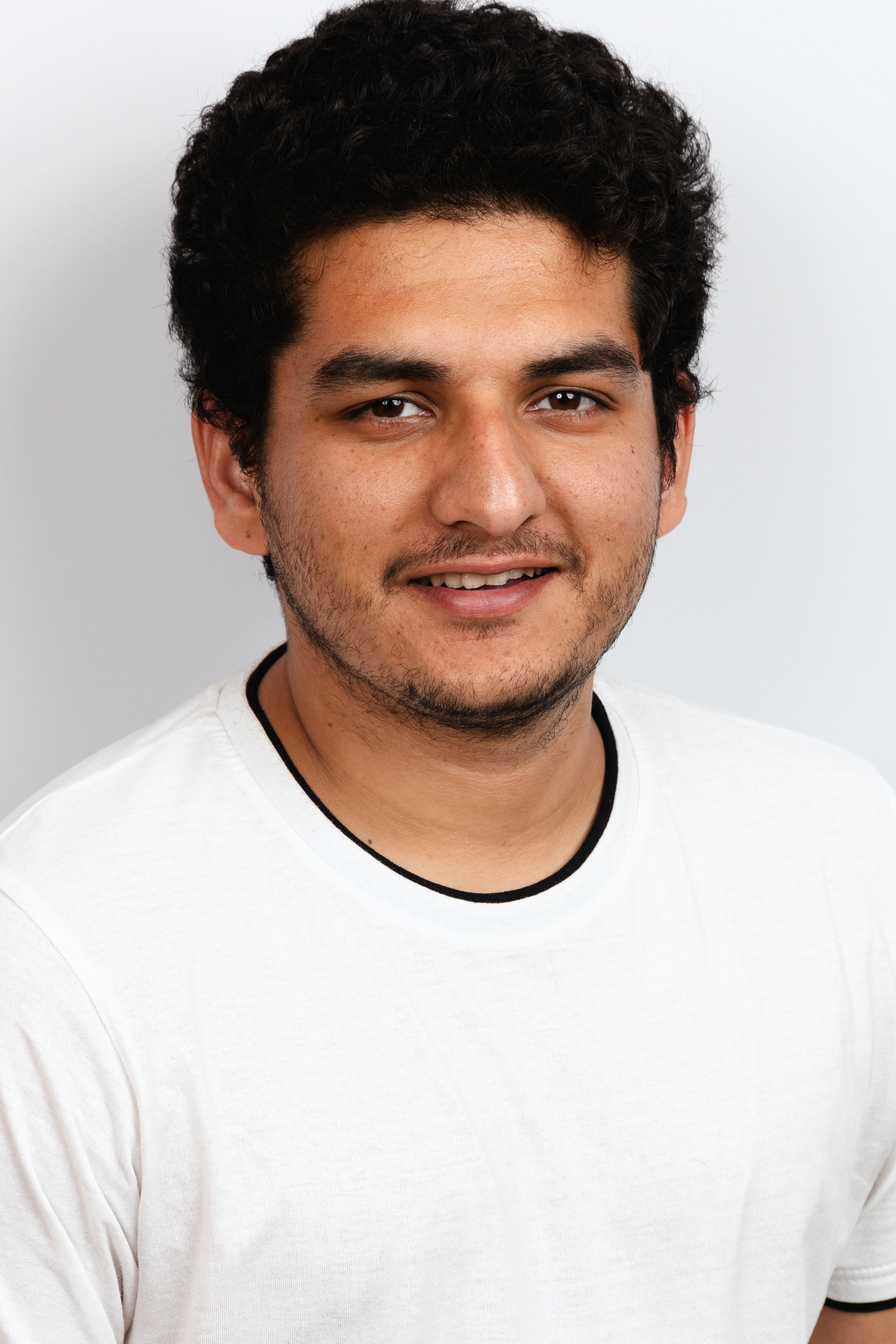
I am a Master's student in Data Science and Artificial Intelligence at Saarland University, Germany, supported by the Zuse School ELIZA scholarship. Alongside my studies, I am a Research Assistant (HiWi) at the Fraunhofer Institute. I hold a Bachelor's degree in Computational Mathematics from Kathmandu University, Nepal.
My professional journey includes working as a Software Developer at Ridgehead Inc. and a Machine Learning Research Internship at Wiseyak, where I worked on large language models and modern deep learning pipelines.
My research interests lie in the theoretical foundations of modern machine learning, with a strong focus on optimization methods for ML algorithms, statistics, and theoretical machine learning. I am also interested in large language models (LLMs) and transformer-based architectures, particularly in how learning dynamics and representations emerge in practice.
Broadly, I am drawn to problems at the intersection of:
- Advanced NLP & Multi-Agent Systems
- Statistical learning theory and generalization
- Large language models and transformers
My long-term goal is to pursue research that connects mathematical theory with reliable, efficient AI systems.
Merit-based scholarship awarded to selected Master's students in Data Science and Artificial Intelligence at Saarland University, recognizing academic performance and research potential.
- Conducting research on agentic AI systems at Fraunhofer Institute
- Exploring optimization theory and statistical learning theory through advanced coursework and independent study.
- Studying training dynamics and emergent behavior in large language models.
Contributing to research projects involving agentic AI systems and large language models, including experimentation, evaluation, and pipeline development.
Engineered scalable production systems and data-driven web applications, strengthening my engineering foundation for building robust ML systems.
Developed and optimized deep learning models and pipelines for LLM-based applications, focusing on performance, reliability, and evaluation.
A from-scratch PyTorch implementation of a meta-learned LSTM optimizer, stress-tested against SGD and Adam across three scenarios.
- Member, Erasmus Student Network (ESN) Saarbrücken
- Active football player at UFC Wacker